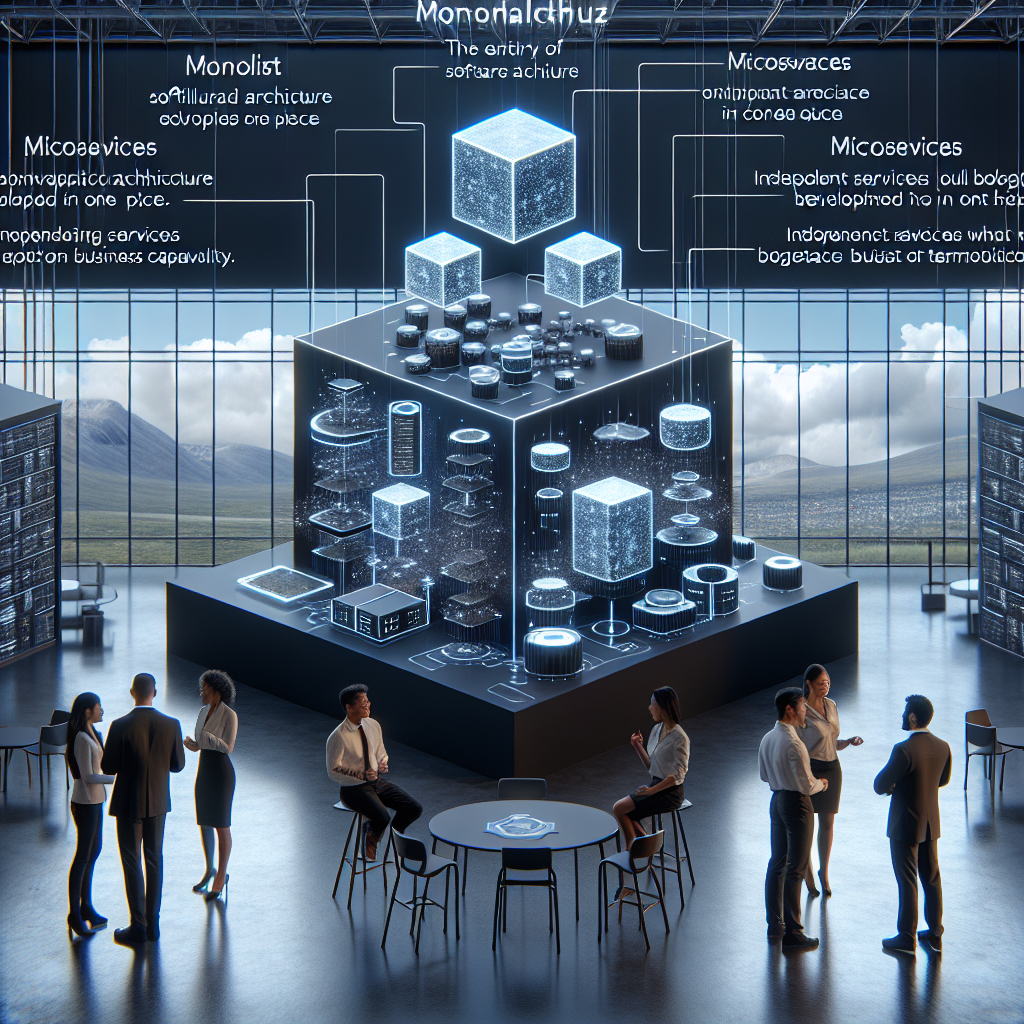

In 2026, navigating the technological tides can feel like charting unknown waters. For C-level executives, making strategic decisions about architectural choices, such as between monolithic and microservices, has implications far beyond IT—it shapes the agility, scalability, and future adaptability of the enterprise. In this pivotal year, understanding these architectures’ nuances is not just nice-to-have; it’s imperative for gaining a competitive edge.
Monolithic Architecture: The Traditional Giant
Monolithic architecture is the traditional heavy-hitter, a unified and self-contained application where all functions run as one interconnected system. This approach offers certain advantages that may appeal to decision-makers aiming for simplicity and ease of deployment.
Firstly, monolithic structures offer a straightforward setup. With everything bundled together, development and deployment follow a singular path. This can initially reduce complexity and streamline processes, aligning well with businesses that prioritize a simple setup over flexibility.
However, the downsides are significant. In 2026’s fast-paced market, the lack of modularity in monolithic systems can stifle innovation. Updates require full redeployment, making it challenging to quickly implement changes in response to evolving customer needs. Moreover, scaling a monolithic application often means scaling everything, which can lead to inefficient use of resources and inflated costs.
Microservices Architecture: The Agile Navigator
Microservices architecture breaks down applications into independent, self-contained units that communicate over network protocols. This modular approach is increasingly favored by companies looking to foster innovation and agility.
In 2026, the demand for rapid adaptation to market changes has propelled microservices to the forefront. Each service operates independently, allowing different teams to develop, deploy, and scale simultaneously without altering or disrupting the entire system. This flexibility is crucial for enterprises aiming to iterate quickly and innovate continuously.
Cost and Complexity Details
While microservices offer agility, they come with their own set of challenges. The initial setup can be complex, with a steep learning curve associated with managing distributed systems. Monitoring and securing inter-service communication requires sophisticated orchestration and tools, potentially increasing overheads. However, these additional costs can be mitigated by leveraging advanced DevOps practices and cloud-native technologies, which automate and streamline operations.
From a strategic perspective, microservices provide alignment with digital transformation goals by ensuring that organizations remain adaptive and customer-focused.
In conclusion, the decision between monolithic and microservices architectures in 2026 should be informed by your company’s strategic goals, operational capability, and market demands. While monolithic applications offer simplicity, microservices deliver the agility and innovation necessary for modern business environments. Carefully weigh the pros and cons, considering both immediate needs and long-term vision.
Ready to transform your business architecture? Contact us today to explore tailored solutions that align with your strategic goals and drive your business forward.